Blog

Floating First: The Gentle Way Kids Learn to Love Water
Wondering what truly sets a child at ease in the water? For parents, the vision of their child confidently floating brings real peace of mind. The Easyswim method, embraced by Señor Swim, takes a refreshing approach: before a child learns strokes, they learn to float. Comfort and confidence come from feeling supported by the water itself, not from forced technique. This focus on floating creates a steady foundation, avoiding the stress and fear that too often plague traditional lessons.
Key Insights
- Floating builds real trust between a child and the water. When kids know they will not sink, they relax and explore more.
- Skills introduced at the right pace lead to stronger, longer-lasting confidence.
- Children learn safety as a lived experience, not a set of instructions.
- Playful tools, like floating suits from the Señor Swim webshop, gently support beginners.
How does it work?
With the Easyswim philosophy, swimming starts at the very beginning. Instead of rushing into strokes or drills, children are encouraged to lie back, stretch out, and find their balance in the water. Special attention is paid to body position and calm breathing. Floating suits can help children experience the reassuring lift of the water while their bodies naturally adjust and their minds grow brave. Instructors keep the environment playful, showing that floating can feel just as fun as any favorite game.
What are the benefits?
Focusing on floating first offers far-reaching rewards. Children who feel safe are quick to experiment, try new skills, and progress at their own pace. Parents often notice fewer tears, less resistance, and more enthusiasm each week. Floating first also means better safety, because the child’s instinct becomes to roll onto their back and breathe if they feel tired or challenged. Teachers see smoother transitions to actual swimming, since muscle tension or panic habits are less likely to form.
Who is it for?
This approach shines for children aged six to nine, a time when curiosity and independence blossom. Those who have struggled in classic lessons or felt afraid of the water find renewed joy. Even strong swimmers can benefit, as floating skills enhance endurance and relaxation no matter their level.
Why does Señor Swim choose this method?
Señor Swim selects floating as step one because it honors how children naturally learn. For decades, rushing into strokes has left many kids anxious or trailing behind. By meeting each child where they are, the Easyswim vision builds proud, resilient swimmers who love being in the water. Floating suits from the webshop provide an extra sense of safety, helping each child believe that “the water is my friend.”
Closing thoughts
Teaching a child to float first is more than a lesson; it is a gift that lasts a lifetime. With patience, playful practice, and gentle support like floating suits, parents see transformation in confidence and comfort every visit. Easyswim and Señor Swim’s approach means every child discovers not just how to swim, but how to feel at home in the water. For children and parents, that relaxed start makes all the difference.

Why Floating First Builds Lifelong Confidence in Young Swimmers
Many parents wonder how to help their children love the water. The secret lies in what happens first. At Señor Swim, the Easyswim philosophy believes that floating is not just a skill but the foundation for all future swimming success. When children learn to float comfortably, everything starts to feel possible—and fun. Imagine your child entering the water with curiosity instead of fear, supported by buoyancy and a smile.
Here are a few things that make this floating-first approach a real game changer for families:
- Children feel safer right from their first lesson because they learn that the water will support them.
- Floating helps kids become more relaxed and confident, turning the pool into a friendly place instead of a source of anxiety.
- Mastering this skill early means children are better prepared for all the other techniques and strokes they will learn later on.
- Fun, colorful floating suits from Señor Swim give a sense of security that builds trust in every splash.
- Starting with floating makes every swimming moment less stressful for both parents and kids.
How does it work?
Instead of rushing straight into strokes and laps, Easyswim lessons begin with floating games and gentle explorations. Instructors use visual cues and gentle guidance to help each child discover their own ability to balance on the surface. Children learn through play and natural movement, not forced drills. Floating suits add a sense of adventure, removing the pressure that many kids feel when trying something new.
What are the benefits of floating first?
Learning to float before tackling anything else opens a world of new feelings. Children learn to trust the water and their own bodies. This trust brings out a sense of calm and joy, making each lesson something to look forward to. Because floating is fun, practice does not feel like work. The foundation becomes so solid that every new skill comes more naturally and with fewer setbacks.
Who is this approach perfect for?
Children who are new to swimming or have some nervousness thrive with floating-first lessons. Ages six to nine are an ideal window, but even older beginners benefit. Parents who want gentle, gradual learning that builds both skill and character will see the difference.
Why does Señor Swim choose floating as the core skill?
Many traditional classes focus on movement and speed, but children need confidence before they can move well. Floating teaches kids they can always recover if they need a moment to rest. In places like the Netherlands, where the Easyswim method began, research shows that children who float first keep swimming—and enjoying the water—for life.
Floating is not just the simplest skill; it is often the most important. By supporting kids with floating suits and games, Easyswim lessons build a safety net that lasts for years. When confidence comes first, ability always follows. Give your child the gift of water confidence and let every dip in the pool be a step toward lifelong safety and joy. With Señor Swim and Easyswim, every child can rise to the surface, ready for more.

Why Playful Learning Makes Swimming Lessons More Effective
Learning to swim is often seen as a serious life skill, but what if the fastest way to progress is to play? The Easyswim philosophy, brought to families by Señor Swim, puts games at the heart of swimming lessons. Children between six and nine thrive in playful settings, so why not make learning to swim a joy instead of a chore? This approach isn’t just fun; it is grounded in experience and research showing that play helps kids master new skills faster, while boosting confidence and safety.
Here are some key insights every parent should know:
- Children learn better when they are having fun, not just following instructions.
- Games can help kids relax, making it easier for them to focus and stay afloat.
- Skill development happens naturally as children play and try different movements.
- Confident swimmers tend to be safer swimmers, and playful lessons build that confidence.
- Minimal equipment is needed because the focus is on body movement in the water.
How does it work?
Instead of endless laps or drilling technique, Easyswim sessions use playful challenges, imaginative games, and friendly competition. Kids might pretend to be dolphins leaping through hoops, race to collect floating treasures, or balance balls on their heads as they glide. These games teach essential movements like floating, gliding, and kicking in a pressure-free way. The focus is on experimentation rather than perfection, so every child feels like a winner by simply joining in.
What are the benefits of learning through play?
When children laugh and play in the water, they forget to be afraid. This playful atmosphere means less tension and better movement. Skills like floating, diving, and even breath control happen as part of the game, rather than as isolated drills. Play naturally encourages repetition, which cements new abilities. And because children want to come back for more, practice never feels like punishment.
Who is this approach best for?
While every child can benefit, those new to swimming or lacking confidence in the water find it especially powerful. Energetic kids who dislike rigid lessons often shine in playful sessions. This approach is tailored for children aged six to nine, offering the perfect balance of freedom and gentle guidance.
Why does Señor Swim choose Easyswim?
Traditional lessons sometimes miss the mark by focusing only on strokes and rules. Señor Swim believes every child should enjoy learning while staying safe. Bringing games into the pool turns swimming into an adventure. Parents see the difference when happy, motivated children leave lessons feeling like champions. To support independent movement, Señor Swim’s webshop offers floating suits that keep kids secure while encouraging free play and exploration.
Does research back this up?
Child development experts agree that play is one of the most effective learning strategies, especially for younger children. Studies show playful learners are more engaged and less anxious, which leads to better skill retention. In swimming, this means kids remember what they learn, are less likely to panic, and become lifelong swimmers.
To sum up, turning lessons into games with Easyswim makes learning to swim safer, faster, and a whole lot more fun. Parents can watch their children grow in confidence, skill, and joy, all while knowing they are in good hands. With Señor Swim and playful learning, swimming lessons become happy memories that last a lifetime.

Why Traditional Swim Lessons Are Failing Your Child And How Easy Swim Is Changing Everything
In a world where every child is unique, the way we teach them swimming should be equally personalized. Easy Swim introduces a groundbreaking method called Progressive Skill Layering, designed to transform hesitant children into confident swimmers. With a focus on child development and confidence building, this approach is a true revolution in swim education.
Why Progressive Skill Layering?
Traditional swimming lessons often overwhelm kids with rigid drills and a one-size-fits-all pace. Easy Swim flips that script. By breaking swimming into clear, manageable steps—floating, gliding, kicking, then strokes—children master each element before building to the next. This not only prevents confusion but turns each lesson into a small victory, boosting confidence along the way.
Benefits for Your Child
With Progressive Skill Layering, every child can thrive at their own pace. The benefits are clear:
• Step-by-step progress with no skipped skills • Visible improvements week after week • Reduced fear, replaced by excitement • Motivation through consistent success • A love for water that grows naturally
Tools That Support Growth
To complement the method, our partner Señor Swim offers exclusive floating suits. These allow children to feel safe and supported while learning, giving them the perfect balance of freedom and security. Parents can see progress not just in skill but in their child’s growing confidence.
Conclusion
Easy Swim’s Progressive Skill Layering is more than a teaching method—it is a confidence-building journey. Children don’t just learn to swim, they learn to love swimming. Give your child the opportunity to progress step by step, at their pace, and watch them glide ahead with joy and skill.

Why Floaties Are Failing Your Child And How EasySwim Sparks True Independence In The Water
Every parent dreams of seeing their child swim with confidence, joy, and independence. EasySwim has reimagined the swimming journey by focusing on what children truly need: early independence and natural skill-building. With innovative floating suits and a play-based method, EasySwim is creating a new standard in kids’ swimming education.
Why EasySwim Stands Out
Traditional lessons often rely heavily on rigid floatation aids that keep kids stuck at the surface. EasySwim takes a different path. By using specially designed floating suits, children are supported just enough to feel safe while still having the freedom to move, balance, and explore the water naturally. This builds real skills faster and more enjoyably.
Benefits for Children and Parents
Parents love the EasySwim method because it combines safety with freedom. Instead of clinging to the pool wall, kids actively gain independence and confidence. Progress is visible in every lesson, and the pride children feel fuels their motivation to keep learning.
Key benefits include:
• Early independence in the water • Faster skill development compared to traditional methods • Stylish and practical float suits that promote natural movement • A safe, fun, and encouraging atmosphere
The EasySwim Advantage
With thousands of parents already choosing EasySwim, it’s clear the method is more than just swimming lessons. It’s about giving your child lifelong skills, confidence, and the joy to truly enjoy every pool or beach day. EasySwim delivers—just add water.

Frequently Asked Questions About Float Suits for Children
Float suits are becoming increasingly popular as a swimming aid for young children, but many parents still have questions (and misconceptions) about their use. In this blog, we answer the most frequently asked questions, supported by insights from swimming experts, real-life experience, and the vision of Senor Swim.
What you'll discover in this blog:
- What a float suit is and how it works
- When and for whom a float suit is suitable
- How it compares to other swimming aids like puddle jumpers and armbands
1. What exactly is a float suit?
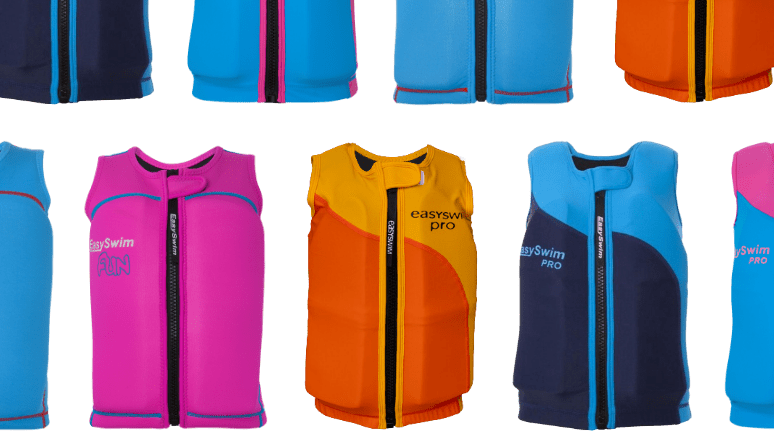
A float suit is a comfortable swimming aid that looks like a swimsuit or vest with built-in floatation elements. Unlike armbands or puddle jumpers, it distributes buoyancy evenly across the upper body, helping children maintain a natural, horizontal position in the water. This is essential for developing real swimming skills.
2. Is a float suit safe?
Yes, when used properly. A float suit is designed as a learning aid, not a life jacket. Supervision by an adult is always required. High-quality float suits, like those from Senor Swim, are thoroughly tested for safety and comfort. Their design allows children to move freely, which is vital for the learning process.
3. From what age is a float suit suitable?
Float suits are generally suitable from age 3. This is when children are developmentally ready to start learning to float, kick, and coordinate movements. For younger children, parent-child water familiarization (without or with light aids) is often a better starting point.
4. What’s the difference between float suits, puddle jumpers, and armbands?
Puddle jumpers and armbands often force a child into a vertical position, which resembles treading water more than actual swimming. A float suit encourages a horizontal posture – the same position children will use when swimming independently later. That makes it a more effective learning tool.
5. How long can my child use a float suit
This varies per child. Some feel confident swimming without support after just a few months, while others benefit from longer use. Senor Swim’s Pro float suit includes removable float elements, allowing you to gradually reduce buoyancy as your child progresses.
6. Can I use a float suit alongside swimming lessons?
Absolutely! In fact, many parents use the suit as a complement to formal lessons or as preparation. Combined with the digital lessons from the Senor Swim Academy, children can continue practicing at home (or on holiday) and build additional water confidence.
7. Are there any downsides?
A float suit is not a magical fix. Children still need to build trust in their own body, balance, and movements. That’s why it’s important for parents to see the float suit as part of a bigger picture – where fun, encouragement, and repetition play a key role.
Conclusion
A float suit is a valuable tool for children who want to learn to swim through play. It promotes the correct body position, builds confidence, and adds fun to water time. By choosing a high-quality float suit – and using it consciously – you can make a meaningful difference in your child's swim development.

Common Myths About Learning to Swim – Debunked
There are many beliefs about learning to swim that don’t always hold true. These myths can make parents feel unsure or prevent them from finding the best approach for their child. In this blog, we’ll explore the most common misconceptions, back them up with insights from swimming experts, and show how Senor Swim offers a proven and modern alternative.
What you’ll learn in this blog:
- The most persistent myths about learning to swim.
- Why traditional methods don’t work for every child.
- How floatation aids and digital swim lessons can actually support progress.
1. Myth: "Floatation aids slow down learning"
Many believe that tools like float suits hinder swimming development. However, research from the Royal Dutch Swimming Federation (KNZB) shows that the right support can actually speed up the process—especially when children move in a natural horizontal position. A quality float suit, like the one from Senor Swim, encourages that posture and gives kids the confidence and freedom to practice without fear.
2. Myth: "All children learn the same way"
In reality, every child is different. Their pace, confidence, and motor skills vary greatly. Senor Swim’s approach—combining float suits with digital lessons through the Senor Swim Academy—is tailored to each child. With video support and easy-to-follow exercises, children can practice at home or on vacation at their own pace. It’s a personalized path to swimming proficiency.
3. Myth: "ABC diplomas are the only way to swim safely"
While the ABC diploma system is widely accepted in the Netherlands, it’s not necessarily the best or only method for every child. Traditional lessons often focus on fixed techniques and rigid paths. In contrast, Senor Swim Academy emphasizes water confidence, enjoyment, and self-reliance—essential elements of true water safety.
The Power of Senor Swim’s Approach
Senor Swim combines high-quality floatation aids with modern digital swim education. By allowing children to get comfortable with water through guided video lessons and playful practice, learning becomes a flexible and positive experience. Parents appreciate this alternative for its blend of safety, freedom, and fun.
Conclusion
Gone are the days of a one-size-fits-all swim journey. By acknowledging that there are multiple ways to become swim-ready, you give your child a better chance to learn safely, joyfully, and effectively. Don’t let outdated myths guide your decisions—choose what really works.

How Playing in the Water Supports Your Child’s Swimming Development
Playing in the water is not just fun – it’s essential for your child’s swimming development. It builds confidence, motor skills, and enjoyment, laying the foundation for safe and independent swimming. In this blog, you’ll discover how play-based learning fosters swimming skills and how the Senor Swim float suit supports these playful water moments.
What you’ll learn in this blog:
- Why playing in the water is so important.
- How play and safety go hand in hand.
- Tips for parents to encourage playful water practice
1. Why is playing in the water so important?
Learning through play stimulates motor development and helps children feel comfortable in the water. According to VeiligheidNL and experts like the Royal Dutch Swimming Federation (KNZB), moving and experimenting in water is the key to building confidence and skills. Activities like splashing, diving, and floating help children become familiar with water in a natural, safe way.
2. The role of the float suit in playful swimming
A float suit, such as the Senor Swim float suit, provides just enough support to allow children to discover how to float and move on their own. This encourages a natural swimming posture, unlike arm floats, which often limit movement. Children learn at their own pace and can move freely – essential for fun and building self-confidence.
3. Practical tips for parents
- Let your child explore the water at their own pace. Use games like “see who can splash the furthest” or “grab the floating toy.”
- Combine the float suit with short swimming lessons to build familiarity and trust.
- Stay close for safety, but allow your child the freedom to discover and play.
Conclusion
Playing in the water is the foundation for safe and confident swimming. By choosing a tool like the Senor Swim float suit, you give your child the opportunity to learn through play and build lifelong water confidence and enjoyment.

Why You Shouldn’t Wait Too Long to Start Swimming Lessons
Many parents think they can delay swimming lessons, but waiting too long actually brings risks. In this blog, we explain why it’s important to start on time and what can happen if you wait too long.
Increased fear of water
The longer you wait, the more likely your child will develop a fear of water. They become less comfortable with splashes and diving, making it harder to enjoy the water.
Group pressure and insecurity
If classmates are already swimming and your child isn’t, it can cause insecurity and social pressure. This can reduce your child’s confidence and make swim lessons less fun.
Fewer opportunities for motor development
Starting early with swimming lessons gives children a unique chance to develop important motor skills. Learning to float, move, and breathe in water gives your child a head start, even outside the pool.
Safety comes first
The sooner your child learns to swim, the safer they are during vacations, family outings, or near water. Swimming isn’t just fun—it’s an essential skill for safety.
Conclusion
Don’t wait too long to start swimming lessons. Starting early means less fear, more confidence, and better water safety. The Senor Swim Academy offers helpful tips and online exercises to support this process at home in a fun and engaging way. That’s how swimming becomes a positive experience for the whole family!

The Benefits of an Online Swimming Method for Young Children
Online learning is now part of everyday life – and that also applies to swimming! But what exactly is an online swimming method? And why are more and more parents choosing it as a supplement or preparation for swim lessons?
In this blog, we highlight the benefits of the Senor Swim Academy, our very own online swimming method. It helps boost confidence, prepare children, and even improve their progress in the water.
What is an Online Swimming Method?
An online swimming method is a digital learning platform where parents and children can practice water confidence, basic techniques, and swimming skills together. Think of:
- Video exercises for home or holidays
- Games and challenges in the bath or pool
- Tips and explanations about motor skills, safety, and buoyancy
- Educational animations or printable exercises
The Senor Swim Academy was developed to prepare children for swim lessons in a playful way and to strengthen existing lessons – fully aligned with the EasySwim method.
7 Benefits of an Online Swimming Method
1. Prepares for swim lessonsChildren who are already comfortable with water and movements at home feel more confident in their first class.
2. Practice together with your childIt creates parent-child bonding moments. You learn together, at your own pace, without pressure.
3. Flexible and usable anywhereIn the bath, garden, pool, or on holiday. No fixed time or location needed.
4. Encourages repetitionChildren learn by repeating. Videos can be watched and practiced as often as needed.
5. Supports children with learning delays or fearsKids who find water scary can first become familiar with it through visual stories.
6. Enhances swim lessonsPracticing online alongside physical lessons leads to faster progress in the pool.
7. Educational and funWith playful videos, rewards, and challenges, it stays engaging for young swimmers.
Conclusion
The Senor Swim Academy is an ideal support for parents who want to prepare their child for swimming lessons or help them learn at home. It’s flexible, fun, educational, and builds confidence and skills in the water.

How to Prepare Your Child for Swimming Lessons
The first swimming lesson can be an exciting moment – both for your child and for you as a parent. So how do you make sure that first step goes smoothly? In this blog, we share practical tips to help you prepare your child mentally, physically, and playfully for swim class.
Why Preparation Matters
A well-prepared start helps:
- Reduce your child's stress or fear
- Accelerate progress in the water
- Make lessons more enjoyable
1. Talk About It Early
Explain calmly what swim lessons are like. Use positive language:“You’ll learn to float, splash, look underwater... and maybe even wear goggles!”
Tip: read a book together about learning to swim.
2. Practice Water Familiarization at Home
Water familiarization is the foundation. Let your child:
- Blow bubbles in the bath
- Pour water over their own head
- Retrieve toys underwater (in the bath or kiddie pool)
Goal: build confidence in and with water.
3. Use a Buoyancy Suit
An EasySwim buoyancy suit provides support while allowing full freedom of movement. It's ideal for practicing during holidays, in the pool, or even in a shallow paddling pool.
4. Visit the Pool Together (Before the First Lesson)
Take a pre-visit to the swim school location:
- What does it look like?
- Where do you change clothes?
- Where will you be sitting as a parent?
This way, your child knows what to expect.
5. Make it Fun and Build Confidence
Let your child pick their own towel, flip-flops or swim bag. Involving them in the preparation helps them feel confident and in control. A good preparation is key to a positive first swimming experience. By practicing playfully, communicating openly, and giving your child a sense of autonomy, you create the ideal foundation for both water fun and swim skills.

Which Swimming Aids Are Safe for Young Children?
When you take a young child into the water, safety comes first. That’s why many parents search online for the “best swimming aid” for their child. But what’s truly safe? And what helps your child most in learning how to swim?
In this blog, we compare the most common swimming aids for toddlers, explain their pros and cons, and recommend which type fits best at each stage of development.
Arm Floaties
Pros:
- Widely available
- Inexpensive
Cons:
- Restricts arm movement
- Can slip off or deflate
- Encourages an unnatural swimming position
Summary: Suitable for short play moments under supervision, but not ideal for learning to swim.
Swim Vests with Back Support / Float Seats
Pros:
- Supports torso and arms
- Comfortable to wear
Cons:
- Limits self-initiated movement
- Child "hangs" in the water without engaging muscles
Summary: Great for recreational splashing, less effective for active swim development.
Buoyancy Swimsuits (e.g. EasySwim)
Pros:
- Promotes a natural horizontal body position
- Full freedom of movement
- Adjustable buoyancy (removable floats)
- Encourages active participation from the child
Cons:
- More expensive than basic floaties
Summary: Best option for children aged 3 and up who want to actively learn to swim. Used in professional programs like EasySwim.
What’s the Safest Option?
The safest swimming aid is the one that best matches your child's developmental stage, motor skills, and learning needs. A buoyancy swimsuit offers the ideal combination of safety and freedom of movement.
Important: No swimming aid replaces the active supervision of an adult.
If you want your child to be not only safe but also truly learn how to swim, a buoyancy swimsuit is the best choice. It encourages movement and builds confidence in the water. Floaties and inflatable toys are fun but offer little support for real swim progress.